
By Vaughn Woods, CFP®, MBA
“We and you ought not now to pull on the ends of the rope in which you have tied the knot of war, because the more the two of us pull, the tighter that knot will be tied. And a moment may come when that knot will be tied so tight that even he who tied it will not have the strength to untie it…”
— Soviet Premier Nikita Khrushchev, in a private letter to President John F. Kennedy, October 26, 1962.
The Caribbean is currently witnessing the breathtaking conclusion of a massive geopolitical cycle—a knot tied tightly in the mid-twentieth century that is finally unraveling today. What began with the romanticized, yet ultimately destructive, guerrilla warfare of the late 1950s is ending not with a spectacular military confrontation, but in the silent, suffocating darkness of an exhausted nation.
As of March 2026, comprehensive satellite telemetry confirms that Havana, along with the vast majority of western and central Cuba, is submerged in a near-total blackout. The island has run out of capital, run out of petroleum, and, unequivocally, run out of time. The communist apparatus, artificially sustained for decades first by the Soviet Union and subsequently by Venezuela, has gone completely bankrupt.
To truly understand this remarkable capitulation, we must examine the arduous history of leverage. Nations do not radically alter their ideological trajectories simply out of benevolence or sudden enlightenment; they change course when they are entirely devoid of options. Today, we are observing the profound humbling of a poor, isolated state, anxious and willing to return to the pragmatic, economic stronghold of the United States.
To perceive clearly where this geopolitical shift is heading, we must walk back through the decades to the genesis of the conflict.
The Spark of Rebellion and a Failed Invasion
The paralyzing tension that grips the Florida Straits today was born in the violent unrest of the late 1950s. Fidel Castro and his chief executioner, Che Guevara, overthrew the Batista government under the populist guise of delivering power to the proletariat. Instead, they rapidly consolidated totalitarian control, executed political dissidents, and installed an iron-fisted communist regime right in America’s backyard. Guevara’s model of guerrilla warfare was subsequently exported across Latin America and Africa, heavily funded and cheered on by the Soviet Union.
For the United States, tolerating a hostile, Soviet-aligned state a mere 90 miles from Key West constituted an unprecedented and intolerable breach of the Monroe Doctrine—the bedrock U.S. foreign policy opposing European or foreign interference in the Western Hemisphere.
In April 1961, the United States attempted to unilaterally extinguish this threat before it could fully metastasize. The CIA backed a contingent of courageous Cuban exiles in an amphibious assault at the Bay of Pigs. The mission, however, descended into a tragic operational disaster. Plagued by intelligence failures and crucially lacking the promised U.S. air support, the invasion ended in the systematic capture or execution of the exile forces.
This aborted intervention yielded profound macroeconomic and geopolitical consequences. It emboldened Castro, weaponized his anti-American rhetoric, and drove Havana irrevocably into the arms of Moscow. It directly set the stage for the most perilous moment in human history—a moment where leverage was measured not in financial tariffs, but in megatons.
Thirteen Days in October: The Ultimate Game of Leverage
In the autumn of 1962, U.S. U-2 reconnaissance aircraft flying high over the Cuban topography discovered an existential threat: the Soviet Union was clandestinely constructing medium-range nuclear ballistic missile sites. These installations possessed the capability to strike Washington, D.C., and most of the continental United States in a matter of minutes, offering virtually no warning time for a reciprocal response.
For those reading this who did not live through that specific epoch, it is nearly impossible to overstate the sheer, suffocating intensity of October 1962. We were children practicing “duck and cover” drills under our wooden school desks—an absurd but psychologically necessary defense mechanism in a world where no one on the planet truly knew if a tomorrow would come. The palpable dread of nuclear annihilation permeated every home, classroom, and boardroom in America.
President John F. Kennedy was confronted with an impossible, apocalyptic calculus. A preemptive military airstrike on the missile sites could instantaneously trigger World War III. Conversely, capitulation meant living permanently under the shadow of a nuclear guillotine. Kennedy opted to deploy a highly calibrated instrument of leverage: a naval blockade. Terming it a “quarantine” to circumvent the international legal definition of an act of war, the message was unmistakable. U.S. warships completely encircled the island, drawing a definitive line in the ocean and daring Soviet supply vessels to cross it.
On the evening of October 22, 1962, President Kennedy addressed a terrified global populace, laying down the ultimate red line:
“It shall be the policy of this Nation to regard any nuclear missile launched from Cuba against any nation in the Western Hemisphere as an attack by the Soviet Union on the United States, requiring a full retaliatory response upon the Soviet Union.”
For thirteen agonizing days, the world held its collective breath. The leverage deployed was physical, military, and entirely existential. Behind the scenes, backchannel diplomacy operated frantically to engineer an off-ramp. Finally, Soviet Premier Nikita Khrushchev blinked. He recognized that the U.S. maintained absolute geographic and conventional military supremacy in the Caribbean, and that pushing the perimeter further guaranteed mutual destruction.
A clandestine accord was struck. The Soviets agreed to dismantle and repatriate their missiles under UN verification. In exchange, the U.S. publicly pledged not to invade Cuba and quietly agreed to remove antiquated Jupiter missiles from Turkey. Nuclear war was successfully averted, but a bitter, icy freeze descended upon U.S.-Cuba relations, permanently locking the embargo into place.
The Long Shadow of Dallas and Cold War Attrition
The profound collective trauma of the early 1960s did not dissipate when the Soviet freighters reversed course. On November 22, 1963, President Kennedy was assassinated in Dallas, Texas. The perpetrator, Lee Harvey Oswald, was a documented Marxist who had spent time aggressively distributing “Fair Play for Cuba” propaganda in New Orleans. Crucially, Oswald had recently visited both the Cuban and Soviet embassies in Mexico City, desperately attempting to secure transit to Havana.
While the official Warren Commission concluded that Oswald acted autonomously, the implication that Cuban actors or sympathizers were involved—or, at the very least, served as Oswald’s radicalizing inspiration—cast a long, impenetrable shadow over diplomatic relations. Trust was entirely impossible. The island devolved into an isolated fortress of anti-American sentiment, surviving solely on massive financial and material life-support from Moscow.
Throughout the decades of the Cold War, successive U.S. administrations maintained the trade embargo, applying a strategy of steady, unrelenting economic attrition. President Richard Nixon, recognized for his pragmatic and hardline posture against communist expansion, understood that the conflict was not merely territorial, but deeply ideological.
“We must always remember that we are not fighting against a nation, but against a system,” Nixon noted, perfectly distilling the long-term U.S. strategy.
The objective was never the systematic destruction of the Cuban populace; rather, it was to definitively prove that the centralized communist economic model could not sustain itself organically.
When the Soviet Union finally collapsed in 1991, Cuba lost its primary benefactor overnight. The island plunged into what Fidel Castro euphemistically dubbed the “Special Period”—a horrific era characterized by severe caloric deficits, rolling blackouts, and total economic paralysis. The communist system had definitively failed, yet the regime managed to endure through sheer, brutal police-state suppression.
The Venezuelan Mirage
Just as it appeared the Cuban regime would succumb to macroeconomic gravity in the late 1990s and early 2000s, an unexpected lifeline materialized from South America: Venezuela.
Hugo Chávez, and subsequently the Nicolás Maduro regime, opted to leverage Venezuela’s vast, previously booming petroleum wealth to purchase ideological influence across Latin America. They brokered a symbiotic arrangement with Havana, exporting billions of dollars worth of heavily subsidized crude oil to Cuba. In reciprocation, Cuba deployed tens of thousands of medical professionals, educators, and—most importantly—military and intelligence operatives to fortify the Venezuelan socialist regime and suppress internal dissent.
This arrangement delayed the inevitable for two more decades, creating a mirage of economic stability in Havana. But as the fundamental law of economics dictates, socialism eventually runs out of other people’s capital. Over the years, the Maduro regime drove Venezuela’s once-world-class oil infrastructure into systemic ruin through staggering corruption, deferred maintenance, and gross mismanagement.
Recently, the total collapse and political transformation of the Venezuelan government completely severed this final lifeline. Bereft of free Venezuelan crude flowing into its ports, the Cuban electrical grid, and the regime itself, began to rapidly asphyxiate.
The Modern Blockade: Tariffs and the End of the Line
This brings us to the absolute masterclass in macroeconomic and geopolitical leverage we are witnessing today. In early 2026, the United States is no longer utilizing destroyers and aircraft carriers to blockade Cuba, as Kennedy did in 1962. Today, the leverage is entirely financial, and it is proving exponentially more effective.
President Donald Trump recognized the fatal vulnerability of the modern Cuban economy. Following the collapse of the Maduro regime in Venezuela, Trump signed Executive Order 14380. This sweeping directive acts as a modern-day, airtight quarantine. It imposes crippling tariffs and severe secondary sanctions on any sovereign nation, shipping conglomerate, or financial institution that attempts to supply petroleum to Cuba.
This represents the brilliant, pragmatic enforcement of the Monroe Doctrine utilizing the global banking and trade apparatus as the primary weapon. The results have been swift and utterly devastating for the regime. Cuba has received zero petroleum shipments in three months. Domestic generation is essentially defunct. The Antonio Guiteras power plant in Matanzas—the island’s largest and most vital generator—suffered a catastrophic boiler failure on March 4, plunging two-thirds of the island into prolonged darkness.
Commercial air travel has ground to a halt due to a total lack of jet fuel, forcing international airlines to suspend operations. In the darkest provinces, state-owned bakeries have desperately resorted to burning firewood and coal merely to produce rations of bread. The communist paradigm, finally stripped of all foreign subsidies and forced to stand on its own economic merits, has collapsed under its own weight.
President Trump summarized the efficacy of this economic leverage clearly and bluntly at the White House late last week:
“Cuba is at the end of the line. They have no money. They have no oil… As we achieve a historic transformation in Venezuela, we also look forward to the great change that will soon come to Cuba.”
The Vatican Bridge and the Return Home
When a sovereign nation is humbled to this profound degree, rigid ideology immediately yields to basic survival. The Cuban government is entirely devoid of options, facing mass starvation and total systemic breakdown. However, historically proud regimes require a mechanism to surrender without explicitly broadcasting a capitulation to their citizenry.
Enter the Vatican.
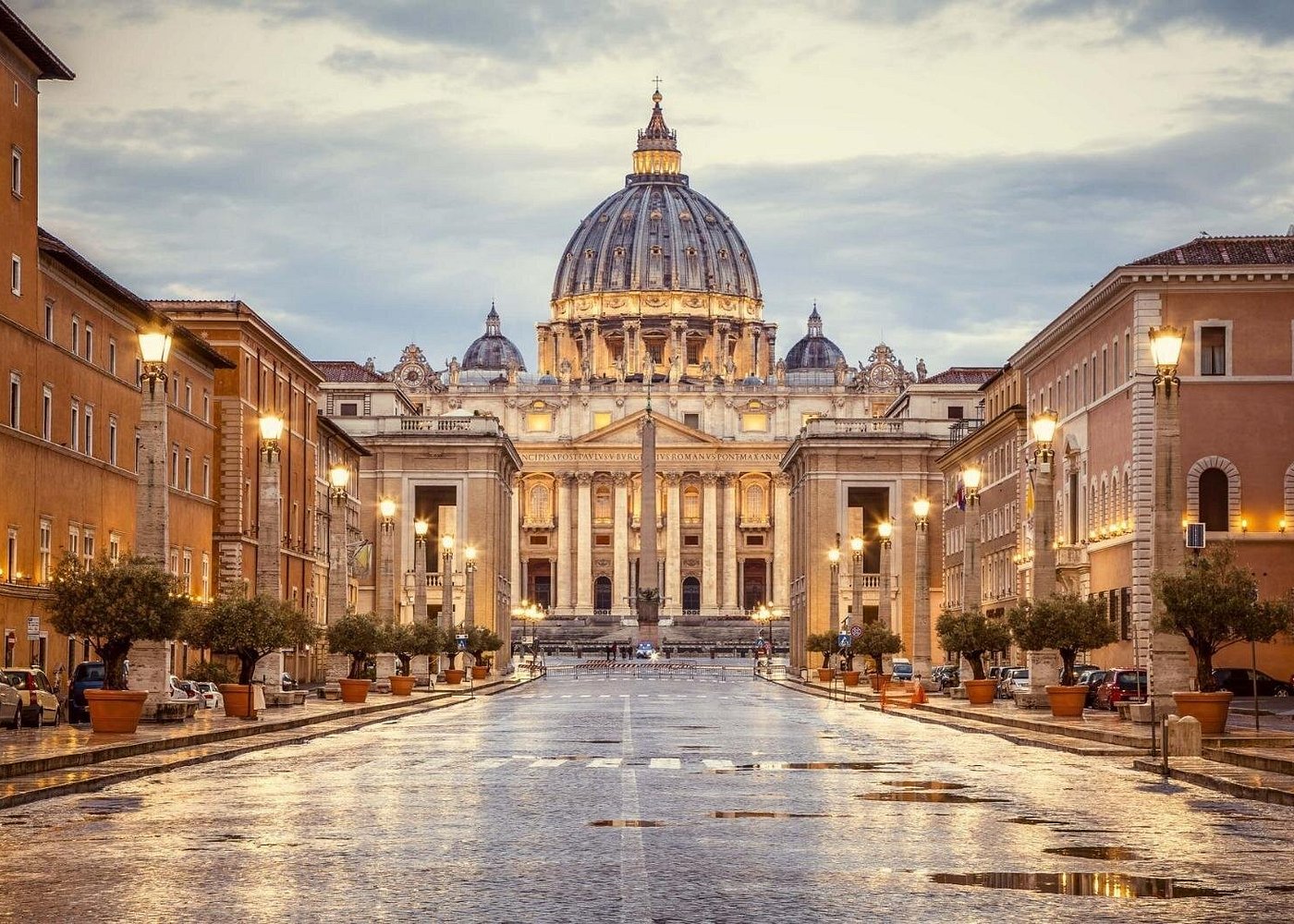
Throughout history, the Holy See has uniquely functioned as a neutral, moral bridge for nations locked in intractable conflict. Because the Pope commands no standing army and seeks no territorial acquisitions, he provides the perfect “face-saving” mediator. Today, Pope Leo XIV is facilitating a highly sensitive backchannel between Washington, D.C., and Havana.
We are already observing the tangible dividends of this high-stakes diplomacy. As a strategic concession, Havana recently announced the planned release of 51 political prisoners. By framing this release as a gesture of “smooth relations” with the Catholic Church, President Díaz-Canel is attempting to maintain a veneer of sovereignty while effectively negotiating the terms of a regime transition.
Even more indicative of the regime’s collapse is the unprecedented $9 million in humanitarian aid that the U.S. State Department recently funneled directly to the Cuban populace. By deliberately utilizing the Catholic Church (Cáritas Cuba) and local parishes to distribute this sustenance and solar equipment, the U.S. circumvented the Cuban government and military apparatus entirely.
The fact that the historically formidable Cuban military stood aside and permitted U.S. provisions to be distributed directly to its citizens constitutes undeniable proof of their desperation. It was a calculated test of leverage by Washington, and Havana conceded. They simply lack the capacity to feed their own people.
Pattern Recognition: The 8 Cycles Since 1962
As we watch this 64-year geopolitical cycle gracefully conclude, it provides an opportune moment to reflect on pattern recognition within our own macroeconomic environments. The fundamental forces that drive nations—leverage, human emotion, rapid expansion, and eventual exhaustion—are the exact same dynamics that govern the capital markets.
Since the Cuban Missile Crisis in 1962, the United States economy has officially experienced 8 distinct boom-and-bust cycles.
We have systematically navigated the stagflation and oil shocks of the 1970s, the extreme interest rate tightening of the early 1980s, the Dot-Com euphoria and subsequent bust of 2001, the Great Financial Crisis of 2008, and the unprecedented pandemic shock of 2020.
To the untrained observer, a “bust” invariably feels like an existential termination. But for the disciplined, analytical investor, studying these 8 cycles reveals a set of crystal-clear patterns:
- Leverage is Usually the Culprit: Just as Soviet and Venezuelan subsidies created an unsustainable “mirage” of stability for the Cuban economy, excessive borrowing mirrors this phenomenon in financial markets. Whether it was heavily leveraged technology conglomerates in 1999 or the subprime housing market in 2008, when the leverage is forcibly removed, the underlying reality is brutally exposed. Debt accelerates the boom, but it inevitably guarantees the bust.
- Reality Always Reasserts Itself: The Cuban communist regime managed to defy macroeconomic gravity for decades, but eventually, the mathematics caught up with them. In the equity markets, speculative bubbles can stretch valuations far beyond intrinsic logic. Ultimately, however, corporate earnings and free cash flow—the fundamental realities of business—always regain control of pricing.
- Panic is Temporary; Progress is Permanent: During every single one of those 8 recessions since 1962, the prevailing sentiment suggested the sky was falling. Yet, following every contraction, the American economy reorganized, innovated, and proceeded to generate an even more robust, enduring expansion. The broader market has consistently recovered, pushing to new historical highs.
This is the profound utility of pattern recognition. When you comprehend that cyclicality is a normal, mathematically inevitable feature of both history and economics, you cease reacting to alarming headlines with emotional panic. You learn to distinguish between a temporary cyclical bust and a permanent impairment of capital, allowing you to remain strategically invested through the full cycle.
The Cycle Completes
We are currently watching a 65-year macro cycle reach its terminal phase. The armed, Marxist guerrilla warfare that Che Guevara violently championed went intellectually bankrupt decades ago, yet the regime limped forward, sustained solely by the charity of America’s adversaries. Now, the capital is gone. The petroleum is gone. The lights have definitively gone out.
Leverage—applied militarily with the threat of kinetic force in 1962, and economically with the undeniable gravity of tariffs in 2026—has executed its purpose perfectly. The humbling of this once-defiant, heavily militarized regime is virtually complete. As quiet, meticulous negotiations continue through the corridors of the Vatican, the geopolitical trajectory is crystallizing.
Cuba is exhausted, anxious, and financially compelled to return to the U.S. orbit. This impending transition restores the Monroe Doctrine to full, undisputed efficacy, decisively closing a perilous chapter of the Cold War and inaugurating a new era of pragmatic, deeply integrated economic partnership within our hemisphere.
The cycle is overwhelmingly clear, and the lesson remains timeless: reality always wins in the end.
Warm Regards,
Sincerely,
Vaughn Woods, CFP, MBA
Vaughn Woods Financial Group, Inc.
2226 Avenida De La Playa
La Jolla, CA 92037
858-454-6900
Vaughn Woods, CFP®, MBA Founder and President, Vaughn Woods Financial Group, Inc.
References
Atomic Archive. (n.d.). Khrushchev to Kennedy (October 28, 1962).
Greater Belize. (2026, March 5). Millions in Cuba left in the dark after power plant failure.
Disclosures
We are unable to accept orders via email. If you wish to place an order, please consult your registered representative or contact the home office trading desk at (800) 649-4554.
This email system is for business purposes only and any information, including attachments, transmitted in this email is not confidential. Any message may be reviewed by authorized compliance personnel and/or produced to regulatory agencies or others with a legal right to access such information.
Past investment performance is not indicative of future results. Securities offered through Bolton Global Capital, Inc., Bolton, MA. Member FINRA, SIPC. Advisory services offered through Bolton Global Asset Management, a registered investment advisor, 579 Main St., Bolton, MA 01740 (978) 779-5361. The disclosure verbiage should be 9 point Georgia font type.”
Investors should be aware that there are risks inherent in all investments such as fluctuations in investment principal. Past performance is not a guarantee of future results. Asset allocation cannot assure a profit nor protect against loss. Although the information has been gathered from sources believed to be reliable, it cannot be guaranteed. Views expressed in this newsletter are those of Vaughn Woods and Vaughn Woods Financial Group and may not reflect the views of Bolton Global Capital or Bolton Global Asset Management. The information provided is for general informational purposes only and should not be considered individual recommendation or personalized investment advice. Representatives and Advisors of Vaughn Woods Financial Group are not tax or legal professionals, if you need tax or legal advice, please make sure to consult a tax professional/CPA and/or a lawyer. VW1/VWA036x.
© 2026 Vaughn Woods Financial Group, Inc. | San Diego, California
Recent Blog Posts
- How Investment Advisory Services in San Diego Can Help You Plan for Long-Term Wealth
- Private Wealth Management in La Jolla: Informed Strategies for Long-Term Financial Planning
- How Can Financial Planning for Multi-Generational Wealth Protect Your Family’s Future?
- From Inheritance to Investment: How Successor Trustees Should Manage Trust Assets
- How Can Successor Trustee Financial Guidance in San Diego Help Protect an Estate?