
By Vaughn Woods, CFP®, MBA
I recently left the training ground for multi-generational dialogue. Instead, I found myself standing in my kitchen, screaming—“REPRESENTATIVE!”—into my telephone. I was trying desperately to keep my voice at a civilized pitch so the robotic voice on the other end wouldn’t politely inform me, “I’m sorry, I didn’t catch that.”
It hit me right then: when did we all collectively agree to let machines give us the cold shoulder?
We didn’t look at the calendar and vote on this. It happened in a slow, calculated creep of “upgrades” that we completely overlooked while we were busy living our lives. Today, we live in a society deeply addicted to digital shortcuts and tracking devices. We have become such efficiency freaks that we willingly let our wristwatches dictate when we stand up, while steadily losing the patience and ability to talk to a real person.
Let’s look at the timeline of how we got trapped in this automated funhouse:
The Great Upgrade Creep
- 1985: The absolute height of mobile luxury was a telephone with a coiled cord long enough to let you walk into the hallway closet for some privacy. If you dialed a business, a living person answered, knew your mother’s maiden name, and handled your problem in forty seconds flat.
- 1991: The Caller ID box arrived. Suddenly, we became armchair detectives, staring at a tiny glowing screen deciding if we actually wanted to talk to Aunt Gladys or if we should let the new-fangled “answering machine” take a message on a tiny cassette tape. We began filtering out spontaneous human interaction.
- 1998: The Telemarketing Boom hit. The dinner hour became a corporate battlefield. The phone rang so constantly with automated solicitation machines that by 2003, the government had to step in with the National Do Not Call Registry. We thought we won. We were wrong. The machines just moved.
- 2007: The smartphone landed in our pockets. We thought it was just a portable phone with a neat map feature. We didn’t realize we had just signed a lease to carry a hyperactive, data-gathering tracking device everywhere we went, permanently fragmenting our attention span (Przybylski & Weinstein, 2013).
- 2011: The Cloud arrived. Nobody knew what it was (and frankly, nobody truly does now), but suddenly all our personal photos, files, and memories vanished into the sky. We stopped owning things; we started renting them from an invisible digital warehouse.
- 2015: The final frontier was conquered: our wrists. The smartwatch attached itself to us, and the boundary between human agency and algorithmic control was officially erased. Now, you can’t even drive down the highway without your wrist buzzing to tell you that a stranger liked a photo of your lunch, or worse, ordering you to “Stand up!” because you’ve been sitting too long.
The Cost of the “Shortcut”
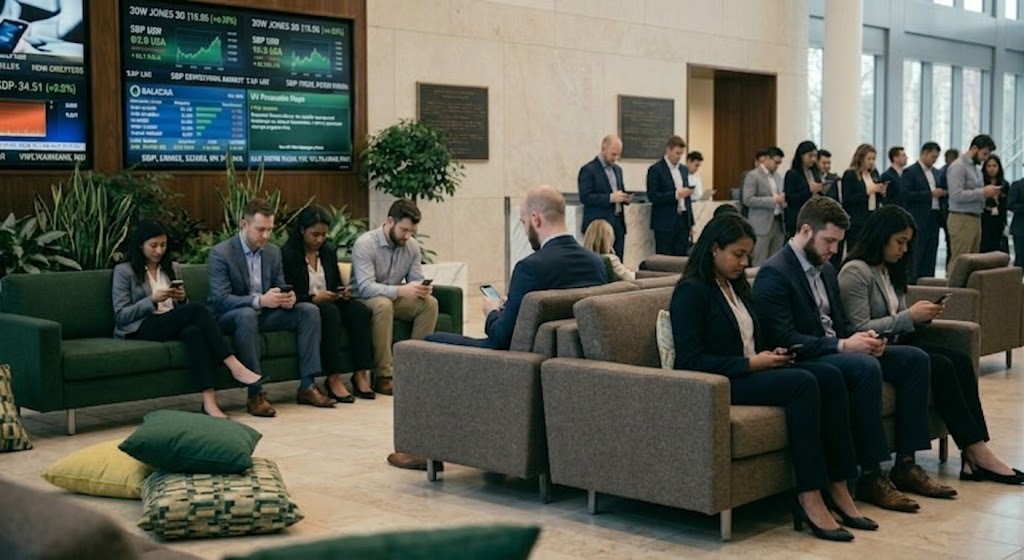
We’ve automated ourselves right into total habituation. Walk into any college classroom or coffee shop today and it’s a sea of blank faces staring at screens, completely immune to the physical world around them (Drago, 2015). We’ve traded the deep, unpredictable art of conversation for the sterile efficiency of a text message. Data shows that the mere presence of a smartphone on a table diminishes the warmth and depth of a face-to-face chat, even if the phone never rings (Dwyer et al., 2018; Przybylski & Weinstein, 2013).
We are so busy tracking our steps, optimizing our schedules, and letting algorithms predict our next thought that we forgot the sheer, indispensable value of just talking to someone. Computer-mediated shortcuts don’t just speed up tasks—they fundamentally alter the quality of human relationships, atrophying the social muscles required to navigate real-time dialogue (Brandon, 2016).
Don’t get me wrong—efficiency is great when it means executing an institutional trade in milliseconds or deploying advanced cybersecurity to keep data secure. But when it comes to your life savings, your family’s legacy, and your hard-earned peace of mind, this hyper-automated version of “efficiency” has gone entirely too far.
Why We Draw the Line
Behind the scenes, our firm utilizes the absolute best modern data architecture and quantitative technology available to analyze market cycles, monitor technical indicators, and manage portfolios with precision. That is where automation belongs. It belongs in the engine room.
But on the front lines? That will never be what you get with us.
When you dial our office, we don’t have a computerized maze of options or an AI assistant trying to parse your intent. A real, living, highly trained person answers the phone. Better yet, that person actually knows who you are, understands your family history, and knows the specific, nuanced context of your long-term wealth strategy. You’ve worked too many decades to be routed to an overseas call center or handled by a generic chatbot.
A Philosophy Worth Sharing
We choose to run our firm this way because we believe the human element of fiduciary care is non-negotiable. True financial stewardship requires deep empathy and high-touch communication—two things an algorithm can never simulate (Stieger et al., 2023).
If you have friends, family, or colleagues who are tired of being treated like a digital account number—and are currently screaming at their own financial firm’s voicemail—feel free to pass this perspective along to them. We are always happy to provide the same old-school, elite human service to the people you care about. And we promise they won’t have to yell at a machine to get a straight answer.
References
Brandon, N. R. (2016). The effect of face-to-face versus computer-mediated communication on interpersonal outcomes in getting-acquainted situations (Publication No. 1739) [Doctoral dissertation, University of Arkansas]. ScholarWorks@UARK.
Drago, E. (2015). The effect of technology on face-to-face communication. Inquiries Journal, 7(5), 1–3.
Dwyer, R., Kushlev, K., & Dunn, E. (2018). Smartphone use undermines enjoyment of face-to-face social interactions. Journal of Experimental Social Psychology, 78, 233–239.
Przybylski, A. K., & Weinstein, N. (2013). Can you connect with me now? How the presence of mobile communication technology influences face-to-face conversation quality. Journal of Social and Personal Relationships, 30(3), 237–246.
Stieger, S., Lewetz, D., & Willinger, D. (2023). Face-to-face more important than digital communication for mental health during the pandemic. Scientific Reports, 13(1), Article 7801. https://doi.org/10.1038/s41598-023-34957-4
About the Author
Vaughn Woods, CFP®, MBA is an independent, fiduciary wealth manager and the Founder and President of Vaughn Woods Financial Group, Inc., based in La Jolla, California. A Certified Financial Planner since 1979, Vaughn leverages more than 45 years of industry experience to guide approximately 100 select family households through complex macroeconomic market cycles. He holds an MBA from Point Loma Nazarene University and a Bachelor’s degree in Journalism from the University of Oregon. Outside of portfolio engineering and active market cycle analysis, Vaughn can be found surfing the breaks of La Jolla Shores or mentoring young East African immigrants, a commitment to local community dialogue he has maintained for well over a decade.
We are unable to accept orders via email. If you wish to place an order, please consult your registered representative or contact the home office trading desk at (800) 649-4554.
This email system is for business purposes only and any information, including attachments, transmitted in this email is not confidential. Any message may be reviewed by authorized compliance personnel and/or produced to regulatory agencies or others with a legal right to access such information.
Past investment performance is not indicative of future results. Securities offered through Bolton Global Capital, Inc., Bolton, MA. Member FINRA, SIPC. Advisory services offered through Bolton Global Asset Management, a registered investment advisor, 579 Main St., Bolton, MA 01740 (978) 779-5361.
Investors should be aware that there are risks inherent in all investments such as fluctuations in investment principal. Past performance is not a guarantee of future results. Asset allocation cannot assure a profit nor protect against loss. Although the information has been gathered from sources believed to be reliable, it cannot be guaranteed. Views expressed in this newsletter are those of Vaughn Woods and Vaughn Woods Financial Group and may not reflect the views of Bolton Global Capital or Bolton Global Asset Management. The information provided is for general informational purposes only and should not be considered individual recommendation or personalized investment advice. Representatives and Advisors of Vaughn Woods Financial Group are not tax or legal professionals, if you need tax or legal advice, please make sure to consult a tax professional/CPA and/or a lawyer. VW1/VWA0382.
Recent Blog Posts
- How Investment Advisory Services in San Diego Can Help You Plan for Long-Term Wealth
- Private Wealth Management in La Jolla: Informed Strategies for Long-Term Financial Planning
- How Can Financial Planning for Multi-Generational Wealth Protect Your Family’s Future?
- From Inheritance to Investment: How Successor Trustees Should Manage Trust Assets
- How Can Successor Trustee Financial Guidance in San Diego Help Protect an Estate?